August 3, 2026
What are the health challenges South African women face?
By Dr Mark Faesen, CHRU, specialist gynaecologist
August is National Women’s Month in South Africa, a time to honour the achievements of South African women while also highlighting their health challenges. Among the most pressing issues they face are HIV infection, breast cancer, and cervical cancer, conditions that have a profound impact on women's health and wellbeing.
HIV remains a major challenge
Women and girls account for the majority of new HIV infections in South Africa. Adolescent girls and young women aged 15–24 are particularly vulnerable, representing around 59% of all new HIV infections, with approximately 1,000 young women becoming infected every week. They also make up about 65% of all people living with HIV in the country.
Several factors contribute to this increased risk, including gender-based violence, relationships with older men whose HIV status may be unknown, limited access to education, economic dependence, and co-infection with other sexually transmitted infections (STIs).
The World Health Organization (WHO) has set ambitious 95-95-95 targets for HIV control by 2030:
· 95% of people living with HIV should know their status.
· 95% of those diagnosed should receive antiretroviral therapy (ART).
· 95% of those on treatment should achieve viral suppression.
South Africa has made significant progress, with approximately 90% of people living with HIV aware of their status, 91% of those diagnosed receiving treatment, and 94% of treated patients achieving viral suppression.
Cancer places an additional burden on women
Breast and cervical cancer are the two most common cancers affecting South African women.
1. Breast cancer affects approximately 15,500 women each year, with an incidence of 31 cases per 100,000 women. Mortality remains high, at 13–15 deaths per 100,000 women, largely because 60–70% of cases are diagnosed at advanced Stage III or IV disease.
2. Cervical cancer is an even greater concern. South Africa records an incidence of approximately 35 cases per 100,000 women, nearly three times the global average. More than 10,000 women are diagnosed annually, and around 5,800 women die from the disease each year.
HIV infection significantly increases a woman's cancer risk. Women living with HIV are approximately six times more likely to develop cervical cancer, and nearly 65% of women diagnosed with cervical cancer are HIV-positive. Persistent infection with the human papillomavirus (HPV) remains the primary cause of cervical cancer.
Preventing cervical cancer
The WHO aims to eliminate cervical cancer through its 90-70-90 strategy:
· 90% of girls fully vaccinated against HPV by age 15.
· 70% of women screened by ages 35 and 45.
· 90% of women diagnosed with cervical disease receiving appropriate treatment.
South Africa has made encouraging progress with HPV vaccination, historically reaching up to 85% of targeted Grade 5 girls with at least one vaccine dose. In early 2026, the Department of Health expanded the national HPV vaccination programme to include girls attending private and independent schools, as well as catch-up vaccinations for young women aged 15–20 years.
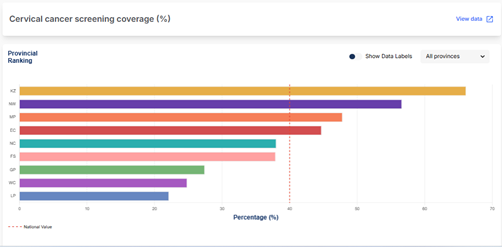
However, cervical cancer screening remains a major challenge. Although screening is available free of charge in the public health sector, only approximately 40% of eligible women in South Africa are currently screened, which is well below the WHO target, with wide provincial variation. To improve early detection, South Africa is transitioning from conventional pap smears to more sensitive HPV DNA testing as the primary screening method.
Treatment of pre-cancerous cervical disease also requires improvement. While services such as colposcopy and LLETZ are increasingly being decentralised to regional and district health facilities, only about 16-20% of women with significant pre-cancerous cervical abnormalities receive timely treatment. Delays in managing invasive cervical cancer continue to be affected by resource constraints and patient loss to follow-up.
A call to action
National Women’s Month is an opportunity to recognise that improving women's health extends beyond treating disease. Reducing HIV infections, expanding access to cancer screening, increasing HPV vaccination coverage, and ensuring timely treatment all contribute to healthier women, stronger families, and more resilient communities.
Continued investment in prevention, early diagnosis, and equitable healthcare services remains essential to improving the lives of women across South Africa.